

You’ll probably be in a similar position to us. Every week we get emails from people offering to ‘triple your leads in 30 days’, ‘dominate Google’ and ‘make your brand go viral’. They’ve never seen your website and have no idea what products/services you offer. Despite this, they know exactly what you need.
It can be tiring and leaves you wondering whether you really need help and who you should be using.
It can be one of the best investments you make using the right digital marketing agency for small businesses. However, if you get the wrong one, you could waste months of your budget and be left with loads of reports and no new customers. We’ll help you understand how to spot the difference.
Why Small Businesses Need an Agency
Most digital marketing advice is aimed at larger companies with large teams.
Small businesses usually have:
A small budget – everything needs to make money for you!
Very little time – you’re likely to be the salesperson, accountant, and even delivery driver.
Quick wins – it’s unlikely you’ll want to wait 12 months.
No in-house marketing team – they become your marketing team.
Large agencies used to managing million-pound budgets may not know how to work within your constraints. You want a small business marketing agency that knows how to work within your constraints.
What to Look for in a Digital Marketing Agency
1. Experience with Similar Businesses
Ask them to show examples of the work they’ve done with businesses of a similar size and stage. They may have a list of high-profile clients, but this doesn’t necessarily mean they’ll be able to help you!
Ask:
Which of your current clients are most like us?
What results have they had, and how long did it take?
Can we talk to anyone?
If they are proud of their small business work, they’ll be happy to put you in contact.
2. Creative Ideas
Many well-known marketing successes have come from small teams with small budgets.
Blendtec (a blender company from Utah) started in 2006 with a low-budget campaign called ‘Will It Blend?’. They filmed their founder throwing everyday items into their blenders (marbles, phones, etc). The videos were inexpensive to produce and became very popular. This is widely credited with increasing their visibility and sales.
The key takeaway here is that often you can achieve great things with clever ideas rather than a large budget. A good agency should be able to come up with ideas like this.
3. Transparent Pricing
This is where most small businesses get caught out. Before signing anything with them, ask:
What is included in the monthly fee?
Are there any separate costs for advertising?
Are there any setup costs or additional costs?
How long is the contract? Can you exit?
Try to avoid long contracts before seeing any results. A confident agency will usually offer a short period to start with or have clear exit terms.
4. Revenue Focused
Whilst likes, followers and impressions are great, it won’t help you pay your rent! Ask the agency what metrics they’ll report on and how they’ll tie into actual business results (enquiries, bookings, sales and calls).
A good rule of thumb is if you can’t explain how it helps you make money, then it probably shouldn’t be highlighted in the report.
5. Right for Your Stage
You won’t need everything. Most small businesses with small budgets should focus on 1-2 channels that are most likely to work for you.
Local SEO and Google Business Profile – if customers are searching for you locally.
Paid search/social – if you want quicker results.
Email marketing – if you want to increase repeat customers.
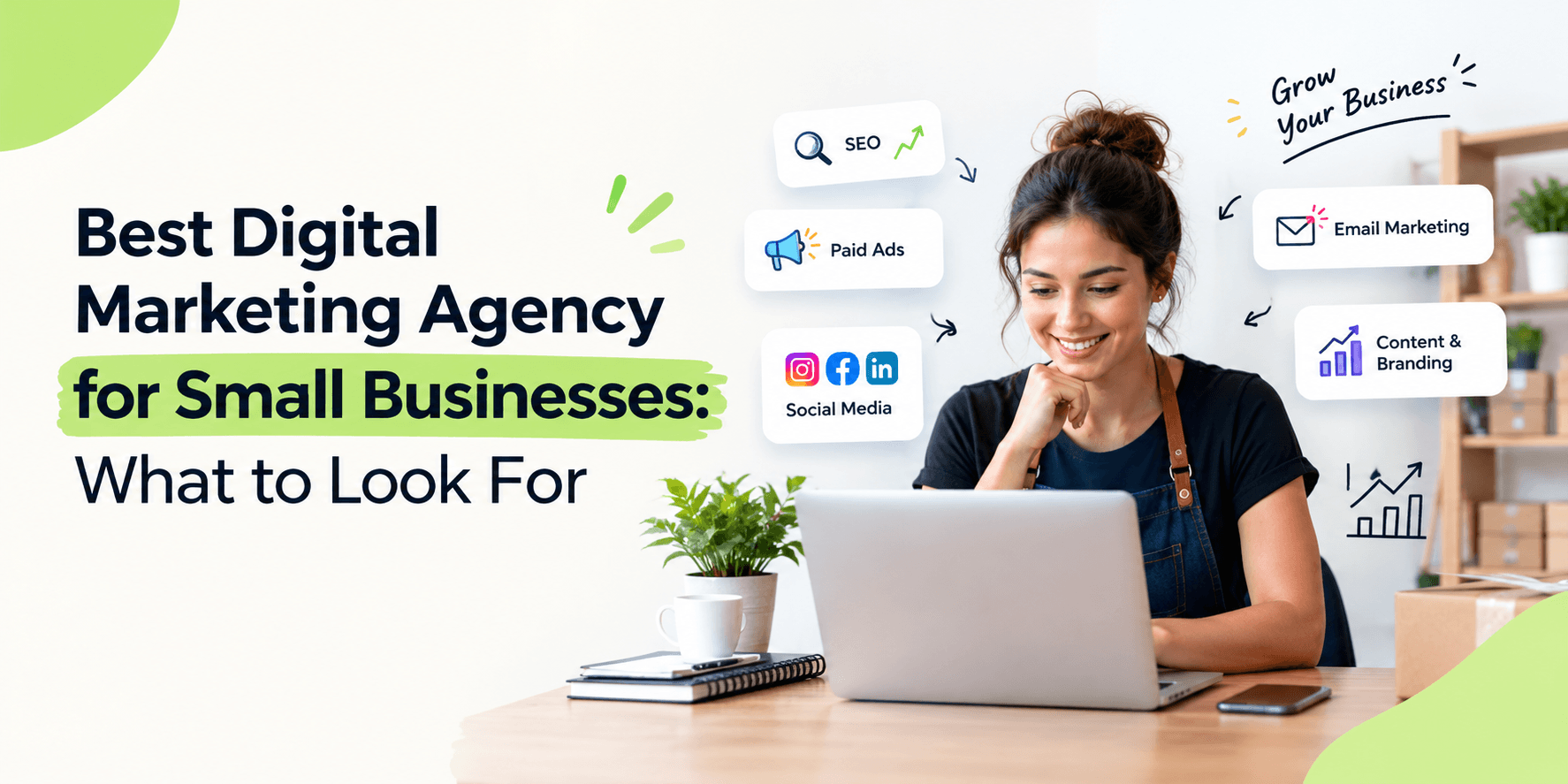
Content & Social – if you want to build trust over time.
Avoid agencies that offer the same large package to everyone. A good agency will ask you about your goals and suggest what to start with and what can wait.
6. Real People
Find out who will be working on your account. Some agencies will impress you during the sales meeting but then put you with a junior member of staff that you’ve never met.
Find out how you’ll be communicating, how often you’ll have calls, and how quickly they usually respond. As a small business, it’s great to know you can get a clear answer within a day.
7. Transparent Reporting
You should have ownership of your advertising accounts, website, domain, and data. You should also be able to see what’s going on in clear reports.
If they aren’t happy for you to have access to your accounts, this is a red flag.
8. Will Say No
The best agencies are honest. Sometimes the best advice will be that your website needs to be improved before you start spending on advertising or that the idea isn’t worth your budget.
If they say yes to everything you suggest, they may be more focused on getting paid than helping you.
Digital Marketing Agency for Startups
If your company is in the early stages, you’ll want an agency that can handle uncertainty, speed, and short runways.
They should be able to:
Help you improve your messaging and positioning before spending on advertising.
Run quick experiments and invest in what works.
Work with limited data.
Be adaptable as your product and audience changes.
A classic example is Mailchimp. They bootstrapped for years and grew slowly by building up a loyal customer base using a simple free plan and genuinely useful content. This is a great reminder that early-stage marketing should be about building trust and patience. A good agency will help you build this base.
If you’re a startup looking at options, look for a flexible agency. Your priorities may have changed in 3 months.
Agency vs Freelancer vs In-House
An agency isn’t the only option. Here’s a breakdown of the options:
Freelancer
Usually cheaper and personal. However, you’ll usually only get one skill set, and availability can be an issue.
In-House
Great for control and culture. However, it can be expensive for a small team and difficult to get all the skills.
Agency
Larger team of experts for one monthly fee. More structured but needs to be careful.
Many small businesses start with an agency to get strategy in place and build momentum. They can then bring in some in-house help.
If you’d like to see how a team focused on growing businesses would approach this, have a look at Bumppd.
Questions to Ask a Digital Marketing Agency
Here are some questions to have to hand when you’re having your first calls.
What would you do in the first 30-60 days?
How will you measure success? How often will you report?
Who will be working on my account? How many clients do they have?
Do I have ownership of my accounts, data and creative?
What happens if we’re not seeing results after a few months?
What is the minimum contract? How can I exit?
Can I talk to a client in a similar position?
Red Flags to Watch Out For
Guaranteed rankings or guaranteed results.
Vague on what you’re paying for.
Pressuring you to sign up quickly with a limited-time offer.
Offering a one-size-fits-all package.
Reporting on impressions and clicks but nothing on revenue.
Not interested in your customers, margins, and goals.
If you see several of these, then keep looking. There are lots of good agencies out there.
What to Expect in the First 60 Days
You’ll want to know what to expect.
First Few Weeks: Listening and Learning
In the first few weeks, a good agency will be listening and learning. They’ll have a look at your website, competitors, tracking, and agree on clear goals.
Second Month: Campaigns and Testing
In the second month, you should start to see some activity. Campaigns will be live, content published, and some initial testing. Results may be small, but you’ll know what is being tested and why.
By 60 Days: Reviewing Results and Planning Ahead
By 60 days, you should know what’s working from the initial data. You’ll also know what you’re going to do in the next quarter. If you’re confused about what they’re doing, this is the time to ask some tough questions.
Final Thoughts
The best digital marketing agency for small businesses won’t be the largest or loudest. They’ll understand your budget, be clear in their communications, be honest about what will and won’t work, and care about your revenue.
Take your time, ask the awkward questions, and trust your gut. Whether you’re a local shop, growing service, or young startup, using the right partner can save you months of trial and error.

Leave a comment